Silence in a martial arts dojo rarely lasts long when Detective James Carter walks through the door.
In one of the most memorable sequences from Rush Hour 3, Chris Tucker and Jackie Chan step into a quiet Parisian training hall looking for answers and immediately find a problem towering several feet above them.
The five-minute, twenty-seven-second clip, highlighted by ClipZone: Comedy Callbacks, captures everything that made the buddy-cop franchise a global phenomenon.
It blends high-stakes physical choreography with the kind of rapid-fire, panic-fueled improvisation only Chris Tucker could deliver.
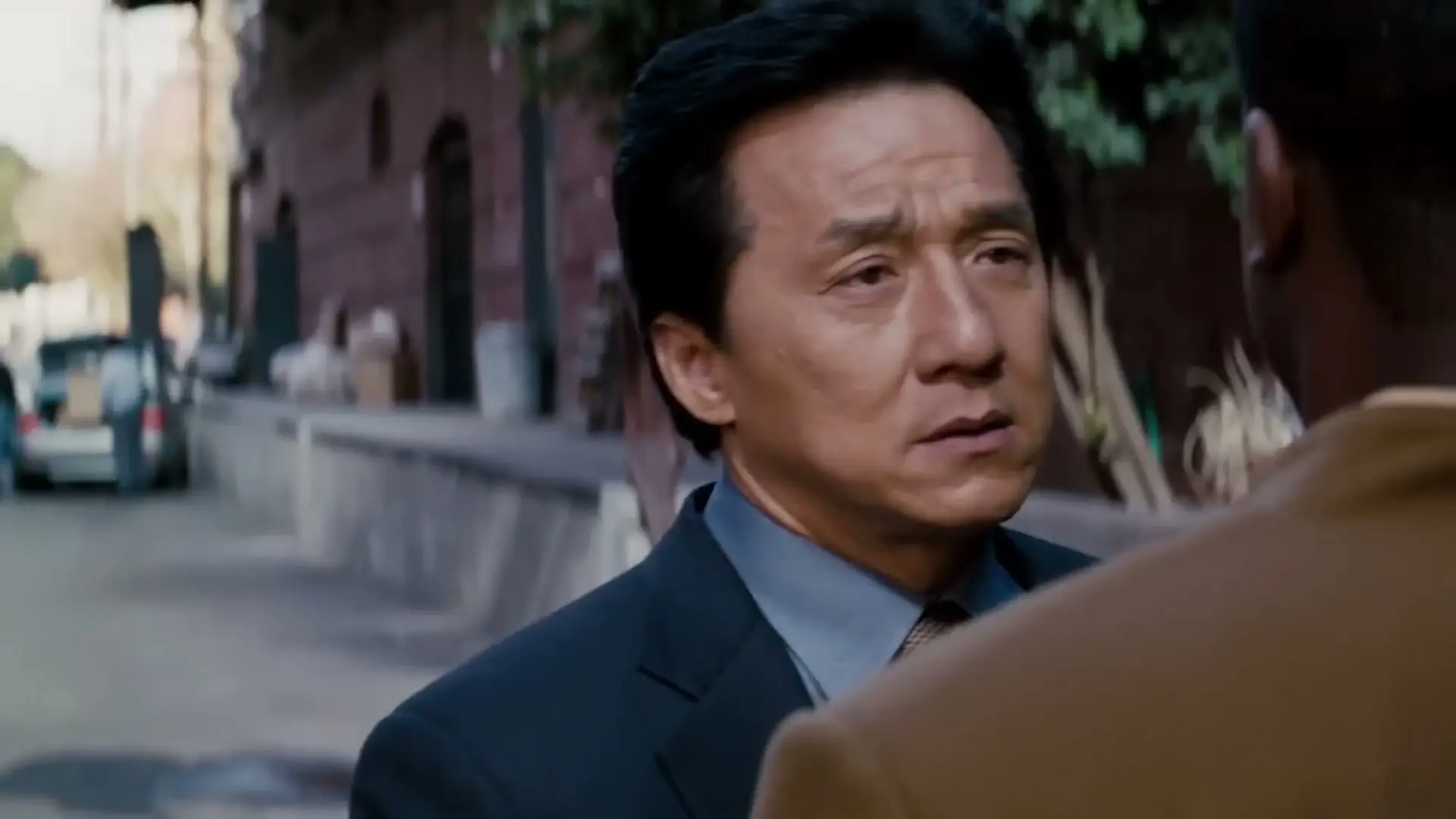
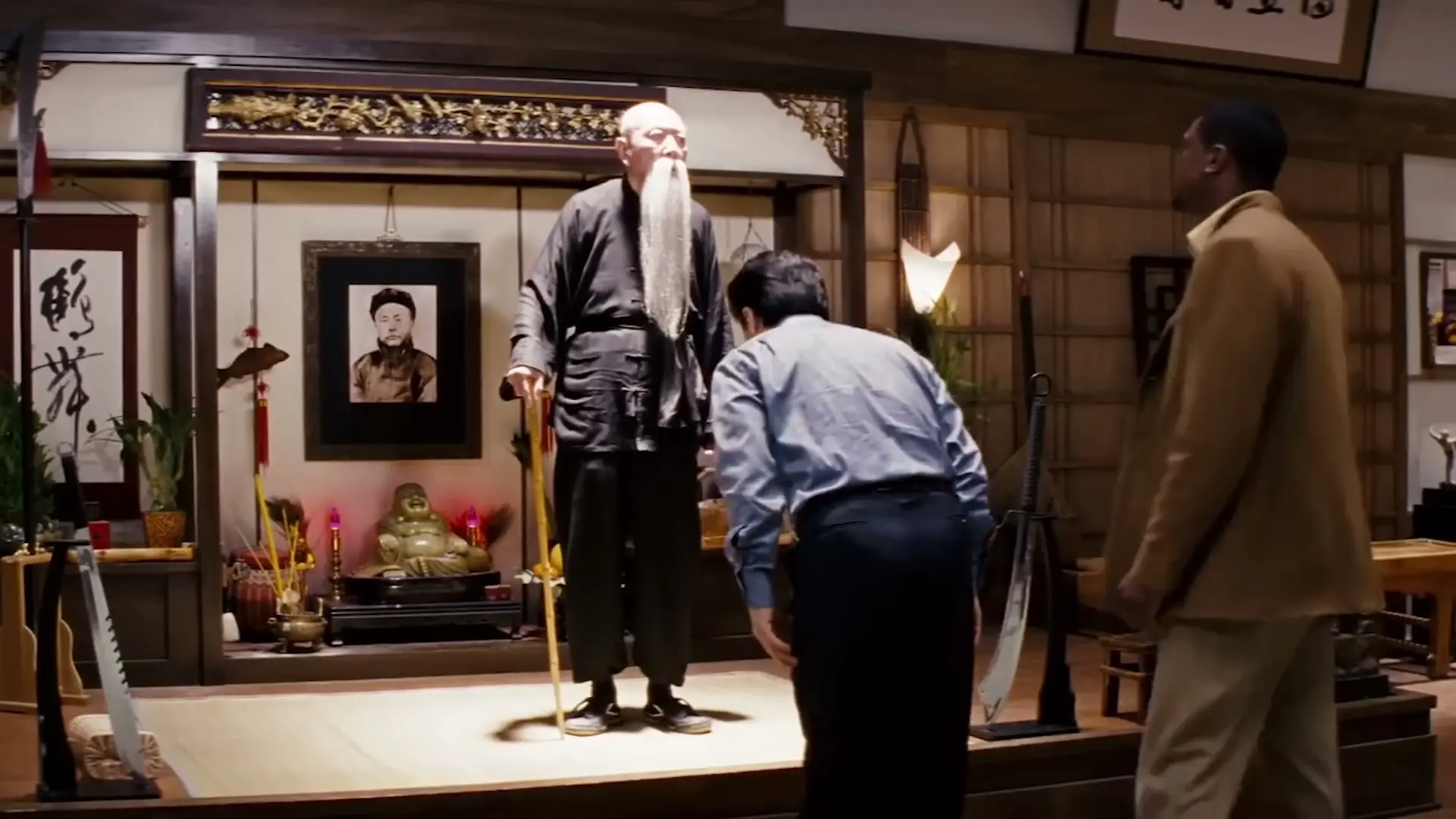
Right around the thirty-eight-second mark, Inspectors Lee and Carter enter the French martial arts studio expecting a routine investigation.
Instead, a massive fighter steps out from the shadows and blocks their path.
The camera lingers on the sheer physical disparity as both detectives freeze in their tracks.
They slowly tilt their heads upward, taking in the staggering size of their new adversary.
Before a single punch is thrown, the scene earns its first big laugh through pure visual comedy.
Lee and Carter share a look of silent eye contact that communicates instant regret without uttering a syllable.
Jackie Chan, playing the seasoned martial arts master Inspector Lee, assesses the threat with his usual kinetic readiness.
Chris Tucker, as Los Angeles Detective James Carter, immediately begins calculating the nearest exit.
What makes Rush Hour 3 endure nearly two decades after its theatrical release is how effortlessly it balances genuine action-cinema craft with unabashed slapstick.
Director Brett Ratner and the stunt team understood that putting an undersized, loudmouthed American cop inside a traditional dojo creates natural friction.
Carter refuses to admit he is outmatched, leaning on bravado as his primary defense mechanism.
That false confidence reaches its peak roughly three minutes and thirty-five seconds into the clip.
Cornered in the Parisian training hall, Carter decides that the best defense is an overly dramatic offense.
He puffs out his chest, talks big to intimidate the towering martial artist, and launches himself into the air for a theatrical flying kick.
Physics, however, refuses to cooperate with his ambition.
Carter collides with the giant fighter and bounces off his chest like a rubber ball hitting a brick wall.
The impact knocks the wind out of his sails and shatters every ounce of his swagger in a fraction of a second.
Tucker executes an instantaneous facial transition from swaggering martial arts hero to wide-eyed, unadulterated panic.
It is a masterclass in physical comedy, proving that Tucker could match Chan beat for beat in body control even when his character had zero fighting technique.
While Chan relies on acrobatic precision, environmental props, and blinding hand speed to survive impossible odds, Tucker turns retreat into an art form.
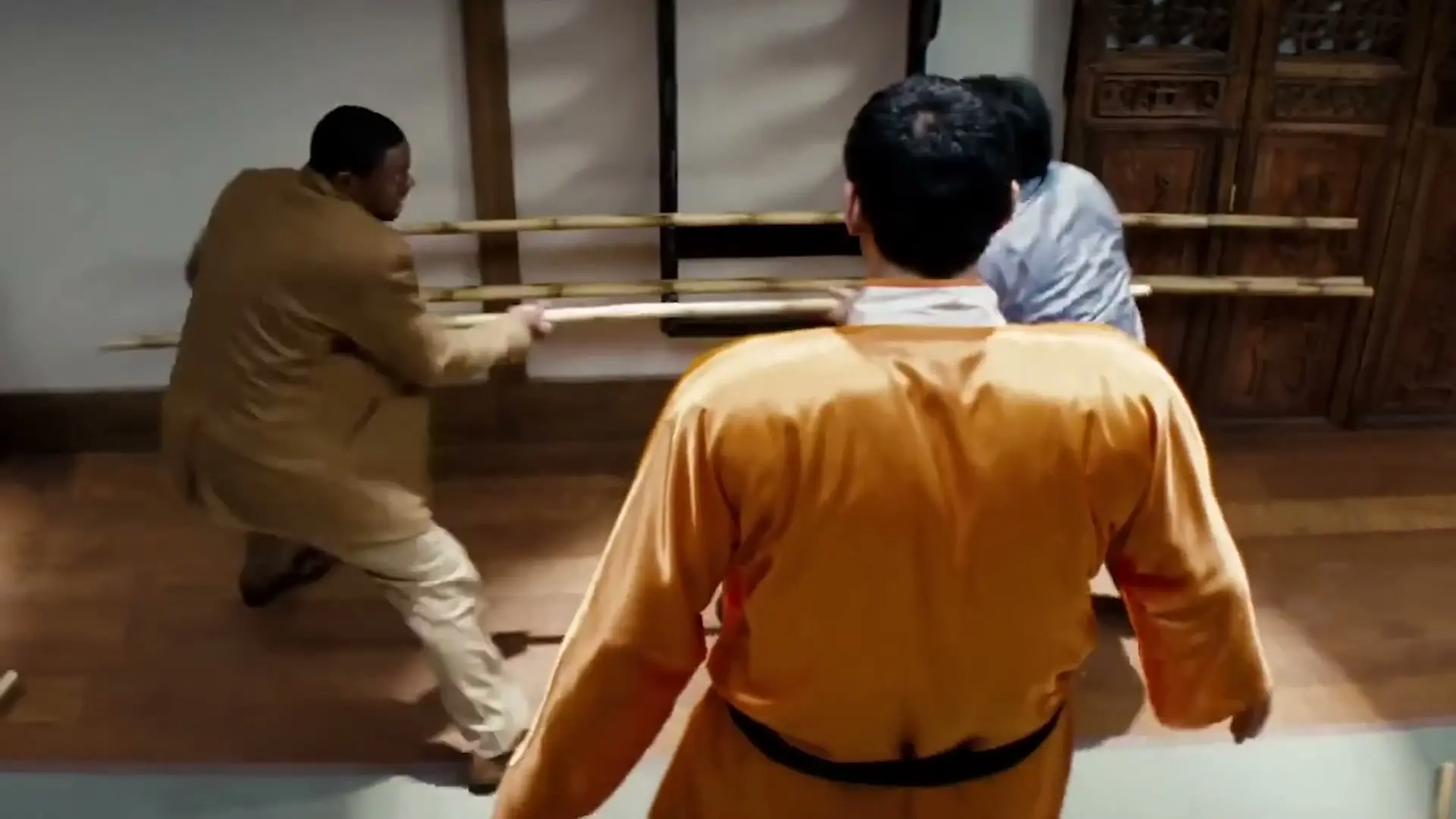
Throughout the chaotic struggle inside the dojo, Carter spends the vast majority of his energy dodging incoming strikes, scrambling across the mats, and trying to stay out of reach.
Every swing from the towering opponent carries the weight of a wrecking ball, forcing both detectives to improvise just to stay conscious.
The choreography uses the dojo space brilliantly, turning wooden beams, training gear, and open floor space into obstacles in a lopsided game of survival.
Yet the defining rhythm of the Rush Hour trilogy has always been the contrast between Lee's humble competence and Carter's shameless self-promotion.
Even as the fight spirals into total mayhem, Carter never stops running his mouth.
His vocal cadence—jumping from a smooth, confident baritone to a high-pitched shriek whenever danger closes in—acts as the soundtrack to the brawl.
Audiences watching the ClipZone highlight are reminded why the chemistry between Chan and Tucker clicked so instantly in 1998 and stayed electric through the 2007 third installment.
Neither performer tries to outshine the other in the same lane.
Chan anchors the spectacle with legitimate martial arts credibility and fearless stunt work, giving every confrontation real physical stakes.
Tucker takes those exact stakes and punctures them with streetwise skepticism and relatable human terror.
When a normal person faces a seven-foot martial artist in Paris, they do not strike a crane pose.
They yell, they flinch, and they wonder why they ever left Los Angeles.
By grounding the absurdity in Carter's very human instinct for self-preservation, Tucker makes the audience laugh with him rather than at him.
The sequence reaches its comedic payoff between the four-minute, forty-six-second mark and the five-minute, twelve-second mark.
Following the exhausting, chaotic struggle across the dojo floor, the towering adversary is finally neutralized.
Dust settles over the training hall as both detectives catch their breath.
Completely drained from spending the entire bout running for his life, Carter wastes zero time rewriting history.
He immediately puffs himself back up and claims full credit for the victory.
With his signature trash-talking delivery, Carter boasts about his supposed martial arts mastery as if he had single-handedly dismantled the giant.
The sheer audacity of his post-fight victory lap transforms the aftermath of a grueling action scene into pure comedy gold.
Lee stands nearby, absorbing Carter's exaggerated claims with the weary patience of a partner who has heard this exact speech across two continents.
That closing beat encapsulates the soul of the entire Rush Hour series.
Action movies often take themselves too seriously, treating every punch as a matter of mythic destiny.
Rush Hour 3 recognized that the funniest thing about an action hero is watching someone survive by sheer luck and immediately take a bow.
Decades later, clips like this Parisian dojo showdown continue to pull in millions of views because genuine comedic chemistry never ages.
As long as audiences crave action spectacles with a heartbeat and a punchline, Detective James Carter bouncing off a giant in Paris will remain timeless entertainment.
Watch full video here: